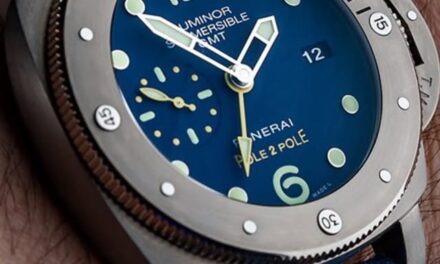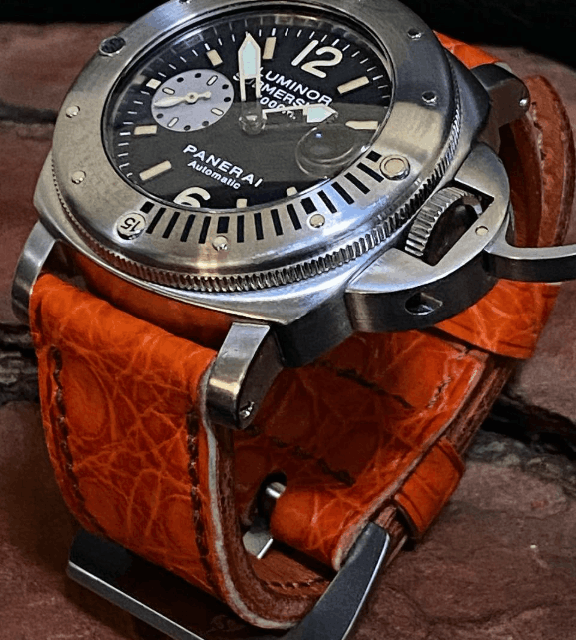
Most strapmakers come to Panerai as collectors first. Simona Di Stefano came to it as staff. Before she ever cut a piece of leather for a customer, she’d spent four years on the other side of the counter, representing the brand directly to the public. By the time she started making straps in 2005, she understood Panerai from a vantage point almost nobody else in the aftermarket world shared.
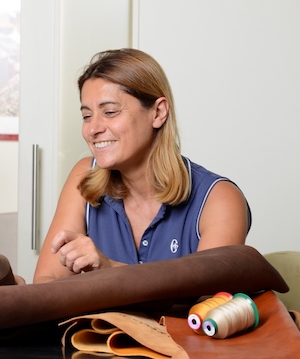
Four Generations of Leather
Di Stefano’s connection to leather predates her connection to watches by decades. Her grandfather, Bruno Allegrini, ran what was, at the time, the largest tannery in Europe. She’s described her own understanding of Italian leather, its grain, its behaviour, what separates good hide from exceptional hide, as something absorbed rather than studied, present from childhood rather than picked up later.
She still pursued a conventional professional path first, earning a first-class postgraduate degree in economics before going into the leather and watch world at all. The strap business that would eventually make her name came only after two separate careers had already given her the material knowledge and the brand knowledge to do it properly.
Inside Panerai Itself
Di Stefano’s first job in the Panerai world wasn’t selling straps, it was selling watches. She became the first manager of Panerai’s new flagship boutique in Florence, running the original store for two years before the brand asked her to open something that didn’t exist yet: its first dedicated Panerai boutique in Portofino. She ran that store successfully for a further two years.
That’s a genuinely unusual credential for an aftermarket strapmaker to carry. Most of the makers who built reputations in the Paneristi world did it entirely from the outside, as collectors solving their own problems. Di Stefano did it having already stood on the other side of the counter, explaining the brand’s watches to customers before she ever built a product for them herself.
Di Stefano Straps, 2005
When she launched her own strap business, the range reflected the depth of material knowledge her family background had given her: calf, cow, buffalo, goat, shark, alligator, and crocodile leather, vegetable-tanned and chromium-tanned depending on the piece, with vintage treatments available across several strap styles. Customers could commission genuinely bespoke pieces, and the catalogue extended well beyond Panerai to other serious watch brands, though Panerai remained the core of her reputation.
The Michael Angelo and the Bronzo Connection
One creation in particular tied her work directly to a specific chapter of Panerai’s own history. The Bronzo, Panerai’s first bronze-cased watch, developed a devoted following specifically because its case ages and patinates uniquely with every owner. Di Stefano designed a strap called the Michael Angelo specifically for it: a dark reddish-brown leather with rose gold stitching, paired with a substantial bronze screw-in buckle that would patinate right alongside the case itself. It wasn’t a generic strap adapted to fit the Bronzo. It was built to age in conversation with it.
The Diver Buckle
Her signature hardware, which she called the Diver Buckle, follows a flat GPF Mod Dep style, a direct design echo of the crown-guard case Guido Panerai built for the Egyptian Navy in 1956, the same commission that gave the modern Luminor its defining silhouette. On the larger 26mm version, the Di Stefano logo sits hidden beneath the leather rather than displayed on the buckle face, a small, deliberate choice that favours the watch’s own presentation over her own branding.
More Than a Transaction
Collector accounts of ordering from Di Stefano consistently describe something beyond a normal retail relationship. She shipped straps as far as active special forces deployments in Afghanistan. One customer, after mentioning he’d appeared on the television show MasterChef, later received an unprompted package from her containing Italian pasta, because, in her words, American pasta options were “horrible,” along with a dubbed Italian-language version of his own episode.
That kind of detail doesn’t show up in a standard vendor relationship. It shows up when someone treats a transaction as the beginning of an actual connection with the person on the other end of it.
October 2022
Simona Di Stefano died on 23 October 2022. Tributes across the Paneristi community were immediate and consistent, describing not just the quality of her work but the specific warmth of dealing with her directly.
“…a true legend of the Panerai hobby.” Paneristi collector, community tribute thread
Fellow strapmakers who never met her in person cited her work as a direct influence on their own. Collectors described planning trips to Florence specifically to visit her studio in person, some successfully, some, sadly, arriving just after she’d already gone.
Understanding a Brand From Both Sides
What made Di Stefano’s work distinct wasn’t just craftsmanship, though that reputation was consistent and well-earned. It was the rare completeness of her relationship with Panerai itself: she had explained these watches to first-time buyers across a boutique counter, then spent the next chapter of her career building the accessories that let those same collectors make the watches genuinely their own. Very few people in the strap world understood both ends of that relationship as thoroughly as she did.
If you own a Di Stefano strap, what’s the story behind it, a specific request she accommodated, a detail she got exactly right? The Paneristi community clearly has more stories like the ones here.
Simona Di Stefano: Key Facts
| Brand | Di Stefano Straps (Di Stefano Di Firenze) |
| Based in | Florence, Italy |
| Family background | Fourth generation in the leather trade; grandfather Bruno Allegrini ran a major European tannery |
| Panerai boutique roles | First manager, Florence flagship; opened and managed the first dedicated Portofino boutique |
| Started Di Stefano Straps | 2005 |
| Signature creations | The Michael Angelo (built for the Bronzo); the GPF-style Diver Buckle |
| Died | 23 October 2022 |