
Some watch brands build heritage through marketing. Panerai built it through secrecy.
For the better part of sixty years, almost nobody outside the Italian military knew Panerai existed. The watches were issued to Navy frogmen, carried out their missions, and disappeared back into the dark. No boutiques. No press kits. No waitlists. Just oversized cushion cases, glowing dials, and some of the most demanding diving conditions ever used to test a timepiece.
That’s the foundation everything else rests on. When Panerai finally opened to the public in 1993, collectors didn’t just buy a watch — they bought access to a story that had been classified for decades. And once you understand that story, the obsession makes complete sense.
This is the full history of Panerai. The real one.

Quick Takeaways
- Panerai was founded in Florence in 1860 by Giovanni Panerai, initially as a watchmaking school and retail shop — not a manufacturer
- The Italian Navy connection began in the early 1900s and produced some of the most historically significant dive watches ever made, all built on Rolex cases and movements
- The brand was effectively classified — Panerai’s military watches were so secret that civilian collectors didn’t know they existed until decades later
- Richemont acquired Panerai in 1997, transforming a niche military supplier into a global luxury brand without dismantling what made it interesting
- The Pre-Vendôme era watches — 1993 to 1997 — are among the most collected Panerais in existence, precisely because they represent the awkward, honest bridge between tool watch and luxury object
1860 — A Watchmaker’s Shop on Ponte alle Grazie
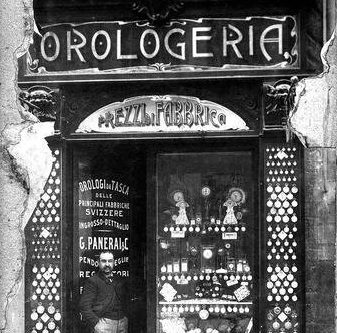
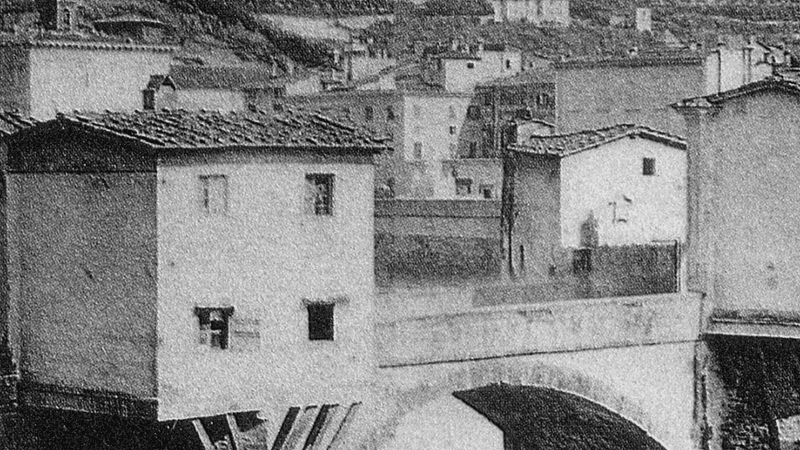
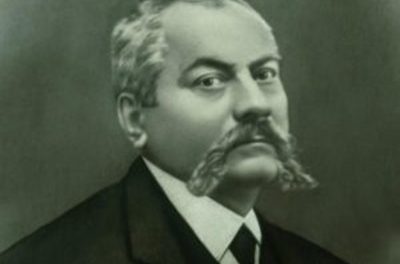
The story starts simply enough. Giovanni Panerai opens a shop on Ponte alle Grazie in Florence, on the south bank of the Arno. It’s a retail operation and a watchmaking school — the first of its kind in Florence. He sells Swiss watches, repairs timepieces, and trains craftsmen.
Nothing about this suggests what comes next.
Giovanni’s grandson, Guido Panerai, takes over in the early 1900s and shifts the business toward something more specialised. The Italian Navy needs precision instruments — compasses, depth gauges, firing mechanisms — and Guido’s shop is positioned to supply them. The relationship deepens. By the 1910s, Panerai isn’t just selling watches; it’s becoming a technical supplier to the Regia Marina, the Royal Italian Navy.
In 1916, the company patents “Radiomir” — a radium-based luminescent powder that makes instrument dials readable underwater in complete darkness. The name comes from “radio mire”: radium sights. It’s intensely radioactive by modern standards, but in 1916 that wasn’t the point. The point was visibility. For a Navy diver operating thirty metres down, your depth gauge needs to be readable. Radiomir made that possible.
“The Radiomir wasn’t invented to be a watch dial treatment. It was invented to keep Italian sailors alive.”
— Panerai brand archive documentation
That patent, more than anything else, is why Panerai exists as a watch company at all.
1936 — The First Watch and the Rolex Connection
By the mid-1930s, Italy’s elite naval combat divers — the Decima Flottiglia MAS, later famous for their attacks on British shipping at Alexandria and Gibraltar — needed a dedicated wrist instrument. Something robust enough to survive combat diving, legible enough to read in zero visibility, and accurate enough to time a mission to the second.
In 1936, Panerai delivers the first prototype Radiomir watches. There are ten of them. The cases come from Rolex. The movements come from Rolex. Panerai makes the dials.
This isn’t a footnote — it’s the defining technical reality of early Panerai history. For the next twenty years, almost everything Panerai produces is built on Rolex architecture: the Ref. 2533 case, then the famous Ref. 3646, a 47mm cushion-shaped monster with wire lugs and a thick caseback. The movements are Cortébert-based calibres supplied through Rolex. Panerai’s contribution is the dial construction — the sandwich dial, with its two-layer structure that allows luminous material to glow through cut-out numerals and indices — and the application of Radiomir paste.
The sandwich dial is genuinely Panerai’s invention. It’s still used today.
Production through the late 1930s and 1940s is tiny. Somewhere in the region of a thousand watches across the entire wartime period. Each one hand-numbered, issued to specific units, and expected to come back.
1940–1956 — Evolution Under Fire
1940 brings a redesign. The wire lugs of the original Radiomir are replaced with solid lugs machined from the same block of steel as the case body — stronger, more durable, and better sealed. This is the case design that gives the Radiomir 1940 its name.
In 1949, Panerai trademarks “Luminor” — a tritium-based luminescent material that replaces the radium-based Radiomir compound. Still radioactive by modern standards, but far safer. The new material has a different visual character: where Radiomir paste burned with an intense yellow-green fire, Luminor glows cooler, steadier.
The crown-protecting bridge follows in the early 1950s. The patent is filed in 1955. It’s the single most recognisable design element Panerai has ever produced — that lever-operated steel bridge that presses the crown against the case, compresses a gasket, and seals the watch against water ingress under pressure. It wasn’t designed to look dramatic. It was designed because plain screw-down crowns weren’t reliable enough for combat diving at depth.
1956 is a significant year for two reasons. First, Panerai produces the Egiziano — the “Big Egyptian” — for the Egyptian Navy. At 60mm in diameter with a rotating bezel, it’s the largest production watch Panerai ever made, and possibly the most extreme military dive watch produced by any manufacturer. Second, 1956 marks the end of the manufacturing relationship with Rolex. From this point, Panerai uses movements from other Swiss suppliers — primarily Angelus, whose SF240 calibre with its 8-day power reserve becomes a signature for high-end Panerai references.
1972–1993 — The Hidden Years
Giuseppe Panerai, the last family member to run the business, dies in 1972. A former naval officer, Dino Zei, takes over and renames the company Officine Panerai — the name it carries today. The focus narrows further: depth gauges, compasses, specialised diving instruments. The watches continue to be produced for military clients, but in vanishingly small numbers.
This is the period that makes Pre-Vendôme Panerais so mythologised. Almost nobody knew these watches existed. No collector market. No press coverage. No grey-market dealers. Just the Italian Navy issuing instruments to its combat swimmers, who wore them on missions, and either returned them or didn’t.
The watches that survived from this era are among the most sought-after in all of watch collecting. A confirmed military-issued Ref. 3646 in documented condition can bring serious money at auction — not because it’s a beautiful object, but because it’s evidence of something that happened.
1993 — The Civilian Debut
The public launch happens in 1993, aboard the Italian Navy cruiser Durand De La Penne in La Spezia. Three references: Luminor, Luminor Marina, and Mare Nostrum chronograph. Limited editions, numbered, immediately sold out.
The timing is deliberate. The fiftieth anniversary of Panerai’s wartime missions. The watches are presented as tribute pieces — replicas of military instruments, made for civilians. But the obsession they trigger is immediate and genuine. Collectors who’d been hunting for information about the military watches for years suddenly had something they could actually own.
The watches from this first civilian series — the Pre-Vendôme era, 1993 to 1997 — are now among the most collected Panerais in existence. The movements are still externally sourced (primarily the ETA/Unitas 6497 base, designated OP I and OP II by Panerai), the finishing is honest and unfussy, and the cases carry the weight of the original military DNA without the polish that came later.
1997 — Richemont and the Transformation
The Vendôme Group — shortly to become Richemont — acquires Panerai in 1997. Jean-Frédéric Dufour is brought in to lead the brand. The objective is clear: take a niche military cult object and build it into a global luxury proposition without destroying what made people care about it.
By most measures, it worked. 1998 sees Panerai debut at the SIHH in Geneva — the same stage as Cartier, IWC, and Jaeger-LeCoultre. The brand is now playing a different game. Production scales. Boutiques open. The collector community, which had been tight-knit and somewhat suspicious of the corporate transition, expands dramatically.
The sourced movements — OP I through OP VI, all based on ETA and Valjoux calibres — continue through the late 1990s and early 2000s. There’s nothing wrong with them. But for a brand charging serious money and positioning itself alongside genuine manufactures, they’re an obvious gap.
2002–2010 — Building a Real Manufacture
The Neuchâtel manufacture opens in 2002. It’s the infrastructure required for what comes next: genuinely in-house movements.
2005 delivers the first one: the P.2002, an 8-day GMT hand-wound calibre. It’s a complex debut — eight days of power reserve, GMT complication, power reserve indicator, date display — and it makes an immediate statement. Panerai isn’t outsourcing and stamping its name on someone else’s work. This is a movement designed and built in-house, by Panerai’s engineers, in their own facility.
The P.9000 follows in 2009, debuting in the PAM00312 — the first Luminor 1950 Marina with both an in-house automatic movement and an exhibition caseback simultaneously. It becomes the standard-bearer for the modern Panerai: a genuine manufacture automatic, robust, proven, and affordable relative to comparable Swiss offerings at the same level.
Over the following decade, the P.9000 spawns a family. GMT variants, chronograph derivatives, power reserve complications. The P.2002 establishes the hand-wound haute horlogerie line. The P.3000 addresses the 47mm hand-wound segment. Panerai builds out a movement portfolio that genuinely reflects the complexity of its collection.
The Lo Scienziato and High Complications
One chapter deserves separate attention. In 2010, Panerai introduces the first Lo Scienziato — “The Scientist” — a skeletonised tourbillon GMT dedicated to Galileo Galilei, the Tuscan polymath born in Pisa whose astronomical work forms the conceptual backbone of mechanical timekeeping.
The Lo Scienziato series is Panerai’s argument that it belongs in haute horlogerie. The PAM00578 of 2016 takes the concept to its technical extreme: a DMLS (Direct Metal Laser Sintering) hollow titanium case — the case is literally printed in powdered titanium, layer by 0.02mm layer — housing a P.2005/T tourbillon with titanium bridges and plates, making the movement 35% lighter than its predecessor. The whole assembly, at 47mm, weighs almost nothing on the wrist.
These are not watches for the collector who wants one Panerai. They’re watches for the collector who already owns twelve and needs a reason to keep going.
Today — What Panerai Has Become
Panerai produces approximately 70,000 watches annually under current Richemont ownership. That figure positions it firmly in the luxury tier — above the true mass-market players, below the ultra-exclusive maisons.
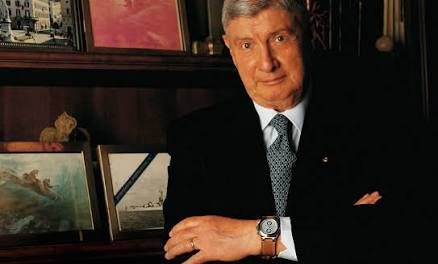
The collection spans everything from the entry-level Luminor Marina in stainless steel, through the mid-range Radiomir 1940 collection, to the Submersible line — now a distinct collection in its own right — and the high-complication Lo Scienziato and equation-of-time pieces at the apex. Jean-Marc Pontroué, CEO since 2019, has pushed harder toward sustainability: recycled titanium in the Mike Horn editions, eco-friendly materials across multiple references, the eLAB-ID.
The Pre-Vendôme pieces — those awkward, honest 1993–1997 watches with their outsourced movements and minimal finishing — continue to appreciate, because they’re the bridge between the classified military history and the luxury brand that emerged from it. Owning a Pre-Vendôme Panerai means owning the moment the secret got out.
Who Should Read Panerey’s Panerai History Content
- New collectors trying to understand why these watches command the prices they do — the history is the answer
- Existing Paneristi who want the deeper context behind specific references and why the Pre-Vendôme era matters
- Watch enthusiasts curious about military watchmaking history and how it connects to modern luxury
- Buyers researching specific references — understanding the manufacture timeline tells you whether the movement inside a given PAM is in-house or sourced, and when that transition happened
Not for: Anyone looking for a quick brand overview. This is the long version. Pull up a reference you’re interested in afterwards.
Conclusion
Panerai’s history isn’t a straight line from Florence to Geneva. It’s a story of military secrecy, Florentine craftsmanship, Rolex cases, radioactive luminous paint, frogmen in the Mediterranean, and a civilian launch that accidentally created one of watch collecting’s most devoted communities.
The crown guard was never meant to be a design statement. The sandwich dial was a functional solution to a legibility problem. The 47mm case was sized for a wetsuit, not a shirt cuff.
None of it was designed to be collected. And yet here we are.
What aspect of Panerai’s history surprised you most? Drop a comment below — I’d genuinely like to know.
Extended Summary
- Panerai began in 1860 as a Florentine watchmaking school and retail shop under Giovanni Panerai, with no intention of becoming a watch manufacturer — the Navy relationship that defined the brand developed decades later
- The military era (1936–1993) produced some of the most historically significant dive watches ever made, all built on Rolex cases, with Panerai contributing the sandwich dial construction and Radiomir/Luminor luminous treatments that remain part of the brand’s DNA
- The Pre-Vendôme civilian debut in 1993 created an instant collector cult; those early numbered editions with their externally sourced movements are now among the most sought-after Panerais, precisely because they predate the corporate polish
- The Richemont acquisition in 1997 and the opening of the Neuchâtel manufacture in 2002 transformed Panerai from a niche curiosity into a genuine luxury manufacture, culminating in the P.2002 in-house calibre (2005) and the P.9000 automatic (2009)
- Today, Panerai produces ~70,000 watches annually across Luminor, Radiomir, and Submersible collections, spanning steel daily drivers to six-figure tourbillons — all of it traceable back to a dive watch issued to Italian frogmen before the rest of the world knew the brand existed





Trackbacks/Pingbacks