Giovanni Panerai never saw a Radiomir. Never touched a Luminor. Never supplied a single watch to the Italian Navy, never met a combat diver, and died 39 years before his great-grandson would build the first prototype that made the family name mean something to a wristwatch collector. Everything Panerai is famous for happened after he was gone.
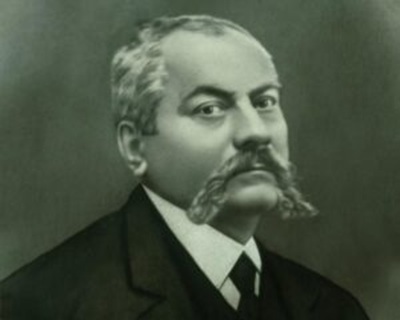
And yet none of it happens without him. This is the story of the man who opened a watch shop on a Florence bridge in 1860, not because he was chasing a legacy, but because it was a reasonable business to start. What he actually left behind is smaller than the myth, and more interesting for it.
Before the Shop
The documented record on Giovanni Panerai’s early life is thin, and it’s worth being upfront about that rather than inventing texture that isn’t there. He was born in Florence in 1825. Beyond that, most of what’s written about him starts the moment he opens the shop, which tells you something on its own: Giovanni Panerai the private individual left almost no trace. Giovanni Panerai the shopkeeper is the only version history bothered to record.
The Shop on Ponte alle Grazie
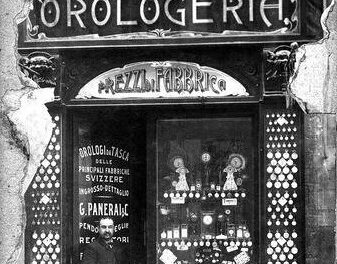
In 1860, one year before Italy formally unified as a modern state, Giovanni opened a watchmaker’s shop on the Ponte alle Grazie, a bridge crossing the Arno a short walk from the more famous Ponte Vecchio. That choice of location wasn’t incidental. The Ponte Vecchio was, and still is, dominated by the city’s gold and jewellery trade. Giovanni located his shop on the neighbouring bridge instead, in a space defined by watches and precision mechanics rather than jewellery. Small decision. Correct one.
The shop did three things at once, which is unusual enough to be worth naming individually: it sold watches, it repaired them, and it taught people how to. That third function, an attached workshop that doubled as Florence’s first formal watchmaking school, is arguably the most consequential thing Giovanni actually built. A shop sells what already exists. A school produces the people capable of building what doesn’t exist yet, and Florence’s community of trained watchmakers, the ones his grandson and great-grandson would eventually draw on, traces back to this one room.
Building Switzerland Into Florence
Florence in 1860 had no domestic watchmaking industry to speak of. What Giovanni actually did with his shop, beyond running it, was establish direct supplier relationships with the major Swiss houses of the era. Over time, Panerai’s shop became a representative for Rolex, Vacheron Constantin, Longines, Angelus, Buren, Movado, and Patek Philippe, an unusually broad roster of serious names for a single Florentine storefront to carry.
This matters more than it sounds like it should. A retail relationship with Rolex in the mid-to-late 1800s wasn’t a branding exercise; it was a genuine supply chain, movements and cases and parts moving from Switzerland to Florence on a level of technical trust that took years to establish. Decades later, when the Italian Navy needed a watch built to survive underwater in total darkness, Panerai’s engineers turned to Rolex for cases and movements because that relationship already existed, built by Giovanni, for entirely unrelated commercial reasons. He wasn’t preparing for a military contract that wouldn’t exist for another seventy years. He was just building a functioning watch business. The foundation happened to still be standing when someone needed it.
A watch industry trade publication later attributed a specific motto to him, one that’s stuck to the brand’s early identity since: “Semper Modum Tempus, Semper Melior.” Always measure time, always be better.
What He Didn’t Do
It’s worth stating plainly, because most brand histories blur it: Giovanni Panerai ran a watch retail and repair shop for 37 years and never built a military instrument. The Italian Navy relationship that defines the brand’s entire modern identity began under his grandson Guido, in the early 1900s, years after Giovanni had died. The Radiomir compound, developed in 1916 for illuminated gun sights and later adapted for dive watch dials, arrived under Guido as well. Giuseppe, Guido’s son, is the one who actually put a Panerai watch on a combat diver’s wrist.
Giovanni built none of it directly. What he built was the shop, the training pipeline, and the supplier relationships that made all of it possible once someone else had a reason to need them.
Orologeria Svizzera and What Came After
The business Giovanni started eventually took the name Orologeria Svizzera, “Swiss Horology,” a fitting label for a Florentine shop built almost entirely on Swiss technical relationships. Around 1900, three years after Giovanni’s death, the operation relocated to Piazza San Giovanni, a move his successors made, not something he oversaw. The company’s own later chapters, the Navy contracts, the Radiomir, the decades of military secrecy that followed, belong to the men who came after him, starting with his great-grandson Giuseppe, who eventually put a Panerai watch on a combat diver’s wrist for the first time.
What Actually Carries His Name
There’s a version of this story where Giovanni Panerai is the visionary who foresaw everything the brand would become. That version is more flattering than the record supports, and it’s not the interesting version anyway.
The real one is smaller and more useful: a Florence shopkeeper opened a business in 1860 that happened to combine retail, repair, and education under one roof, and happened to build supplier relationships deep enough that they were still functioning three generations later, when his great-grandson needed exactly that infrastructure to answer a call from the Italian Navy. Giovanni didn’t design a single feature of a single Panerai watch anyone collects today. He built the room those watches would eventually be designed in.
Does a founder’s legacy mean more when it’s the direct result of a specific decision, or when it’s the accumulated weight of infrastructure that outlasted him by decades? With Giovanni, it’s clearly the second. Does that make his story less significant to you, or more?
Giovanni Panerai: Key Dates
| Born | 1825, Florence |
| Opens watch shop on Ponte alle Grazie | 1860 |
| Shop functions | Retail, repair workshop, Florence’s first watchmaking school |
| Swiss supplier relationships established | Rolex, Vacheron Constantin, Longines, Angelus, Buren, Movado, Patek Philippe |
| Died | 1897, Florence |
| Business renamed Orologeria Svizzera, relocated to Piazza San Giovanni | c. 1900, under his successors |
| Succeeded by | His grandson, Guido Panerai, who began the Italian Navy relationship |