

Most watch brands build their legend around a founder who wanted the world to see what he’d made. Giuseppe Panerai spent almost four decades doing the opposite. For 38 years, he ran a Florentine watch company that operated in near-total secrecy, supplying combat divers with instruments the public wasn’t allowed to know existed. He never opened a boutique. He never advertised. He died in 1972 having sold precisely zero watches to a civilian customer.
And yet the two designs everyone associates with Panerai today, the Radiomir and the Luminor, exist because of decisions he personally made. This is his story, not the brand’s full chronology (that’s covered in more depth here), but the specific 38 years when one man’s choices shaped what a Panerai actually is.
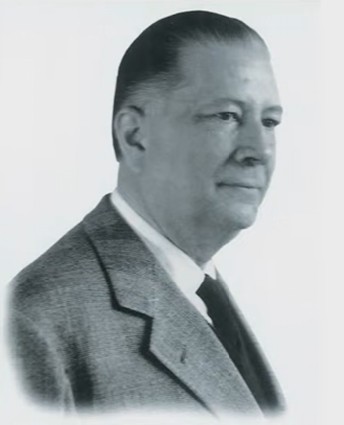
The Inheritance (1903–1934)
Giuseppe Panerai was born in Florence in 1903, into a business that already had history behind it. His great-grandfather Giovanni had opened the original watchmaker’s shop on the Ponte alle Grazie back in 1860. His father, Guido, had spent the early 1900s turning that shop into something more specialised: a supplier of precision instruments to the Regia Marina, Italy’s Royal Navy.
Giuseppe grew up inside that transition. In 1920, at just 17, he worked alongside his father on the concept for what would eventually become the Mare Nostrum chronograph, a two-counter deck watch that wouldn’t actually reach production for another 23 years. It’s an early sign of a pattern that would define his career: long gaps between an idea and its execution, usually because the Navy’s requirements, not the market’s, set the schedule.
When Guido died in 1934, the business split cleanly along a line that had probably been forming for years. Giuseppe’s sister Maria took over the retail shop in Piazza San Giovanni, the public-facing side of the family name. Giuseppe took the other half: the military supply contracts. He devoted himself to it almost exclusively. From that point on, there wasn’t really a “Panerai brand” in any commercial sense. There was a family shop his sister ran, and a classified instrument supplier his brother ran under the same name.
The Secret Commission (1935–1938)
This is the part of Giuseppe’s career that actually matters, and it happened fast.
In 1935, the Italian Royal Navy set up a secret program to develop underwater assault vehicles and the operators who would ride them, an early combat-diver unit that would later become the Decima Flottiglia MAS. The Navy needed a wristwatch that could survive the conditions: total darkness, extended submersion, and legibility that didn’t depend on ambient light. Giuseppe Panerai commissioned the prototypes.
Working with Lieutenant Commander Carlo Ronconi, he developed a radium-based luminous compound bright enough to read underwater in complete darkness. They called it Radiomir, from radio and mira, roughly “radium sight.” The first prototype was delivered in 1936 to the Navy’s First Submarine Group Command. It passed. By 1938, the design was in limited production as reference 3646: a 47mm cushion case, a Rolex-supplied 16-line movement, radium-filled numerals visible from arm’s length in pitch black water.
Panerai produced maybe 300 of these watches, total, before 1993. That’s not a marketing number. Nobody was counting units for a catalogue. The Navy ordered what it needed, when it needed it, under conditions of military secrecy that made even internal recordkeeping sparse.
Watches at War (1939–1945)
The Radiomir wasn’t a design exercise. It went to war.
Decima Flottiglia MAS frogmen wore Panerai’s instruments on real missions, including the 1941 raid on Alexandria harbour, where Italian combat swimmers rode manned torpedoes into a British naval base and placed limpet mines against enemy hulls in total darkness. A journalist covering the brand’s history later put it plainly: “Timing was obviously a matter of life and death.” That’s not an exaggeration for effect. A frogman misjudging elapsed time underwater, in the dark, near an enemy fleet, wasn’t making a scheduling error. He was making a fatal one.
Giuseppe wasn’t in the water. But the instrument strapped to the wrists of the men who were existed because of decisions he’d made three years earlier, about a luminous compound and a case that had to survive conditions almost nobody else was designing for in 1938.
Radium’s Reckoning (1945–1956)
After the war, the problem with Radiomir became impossible to ignore: it was radioactive. Not catastrophically, by the standards understood at the time, but enough that continuing to strap radium against skin for extended underwater missions was no longer a defensible position as radiation science matured through the late 1940s.
Giuseppe’s answer was Luminor, a self-illuminating compound patented in 1949 that didn’t carry the same radioactive baggage. It’s easy to understate how significant this switch actually was. Radiomir wasn’t just a dial coating; it was the entire premise the watch had been built around. Replacing it meant re-engineering the thing that made the watch work in the first place, under a company that still had no public product, no market feedback, and no reason to do any of this except that the Navy’s needs, and basic safety, demanded it.
Then, in 1956, Panerai developed a new case for the Egyptian Navy, supplied with the Italian Navy’s consent. It carried a crown-protecting bridge, a mechanical lever that clamped the winding crown against the case to keep water out under pressure. Collectors know this design today as the defining silhouette of every modern Luminor. In 1956, it was a solution to a specific problem for a specific foreign client, developed by a company still operating almost entirely outside public view.
Thirty Years of Silence (1956–1972)
Here’s what made Giuseppe’s version of this company genuinely unusual, not just historically interesting: for the last sixteen years of his life, Officine Panerai wasn’t really a watch company in any sense a modern reader would recognise. It made compasses. Wrist depth gauges. Underwater torches. Detonators. The wristwatch production that collectors now obsess over was a small, classified sideline within a broader instrument-supply business, one whose largest and functionally only customer was a navy that required silence as a condition of the contract.
No boutiques. No press coverage. No waiting lists. If you wanted a Panerai in 1965, you needed to be a combat diver, not a customer.
No Heir (1972)
Giuseppe Panerai died in 1972 without children. For a company that had passed from Giovanni to his grandson Guido to Guido’s son Giuseppe across three generations, in a straight line every time, that was the end of the bloodline running the business.
His widow held the company briefly. Then the Navy, still the operation’s only real client, issued something close to an ultimatum: either a specific person took over and kept the classified contracts running, or the relationship, and likely the company, would end. That person was Dino Zei, a retired Navy officer who had spent years on the procurement side of exactly these contracts. Zei took over, renamed the business Officine Panerai S.r.l. (deliberately reviving the name that had appeared on the very earliest models), and kept the military supply relationship alive for another two decades.
The public brand most people know today, the boutiques, the 1993 civilian launch, the 1997 acquisition by the Vendôme Group (later Richemont), all of that came after Giuseppe. It’s a genuinely different chapter, with its own detailed chronicle of the Radiomir’s evolution from combat instrument to contemporary collection. Giuseppe never saw any of it. He never intended to.
Why Giuseppe, Specifically
It would be easy to credit Giovanni with founding the brand, or the modern executives with building the global company that exists now. Both would be technically correct and both would miss the actual point.
The Radiomir compound, the case that went to war at Alexandria, the switch to Luminor when radium became indefensible, the crown-guard bridge built for an Egyptian client that became the design language of every Luminor since: those are Giuseppe’s decisions, made across 38 years by a man running a company that had exactly one customer and zero interest in being known. Pick up any modern Luminor and you’re holding a direct descendant of a problem he solved for a navy in 1956. That’s not brand mythology. That’s just where the design came from.
If Officine Panerai had stayed a public-facing shop the way Maria’s side of the business did, would the Radiomir and Luminor even exist in the form we know them? What do you think drove Giuseppe to stay so committed to secrecy for almost four decades?
Giuseppe Panerai: Key Dates
| Born | 1903, Florence |
| Took over family military-supply business | 1934, following the death of his father Guido |
| Commissioned first Radiomir prototypes | 1935–36, for the Italian Navy’s classified combat-diver program |
| Reference 3646 enters limited production | 1938 |
| Watches in active combat use | 1940–1945, including the 1941 raid on Alexandria |
| Luminor compound patented | 1949 |
| Crown-guard case developed for Egyptian Navy | 1956 |
| Died, without heirs | 1972 |
| Succeeded by | Dino Zei, renaming the company Officine Panerai S.r.l. |




Trackbacks/Pingbacks