Quick Takeaways
- Panerai Platinumtech is a proprietary, patented hardened platinum alloy, first used in 2021 on the Luminor Marina PAM01116. Platinum’s weight and white colour, without the softness.
- Standard Pt950 measures around 130 to 150 Vickers. Platinumtech is considerably harder, and Panerai quotes 80% harder than regular platinum.
- It appears in four limited references: the PAM01116 (70 pieces), the PAM00715 (100), the PAM01364 (200) and the PAM01432 (24, an Experience edition).
- Panerai had made platinum watches before, such as the PAM00373, in conventional platinum. The difference is hardness, not the metal.
- The hardness is also the catch: harder to polish, harder to repair and tied to Panerai’s service network.
Jump directly to the overview table.
Platinumtech the Alloy That Redefines Platinum Cases
Platinum has long carried an aura of permanence in watchmaking. It is dense, lustrous and rarer than gold, and it symbolises exclusivity. It also has a flaw: softness. Standard Pt950, the industry alloy containing 95% platinum, scratches and deforms more easily than most collectors expect from a metal that costs this much.
In 2021 Panerai answered with Panerai Platinumtech, a patented, hardened platinum alloy first seen in the Luminor Marina PAM01116. The promise was the prestige of platinum with fewer of its everyday drawbacks, and a collector’s metal that you could actually wear. Four limited references have followed since.
But what exactly is Platinumtech? Which watches carry it? And how does it sit in Panerai’s catalogue of experimental materials, next to Goldtech, Carbotech and the rest? I’ll go through all of it, including the parts that aren’t flattering, because a material this expensive deserves a plain look at what it costs you after the purchase.
What Is Panerai Platinumtech?
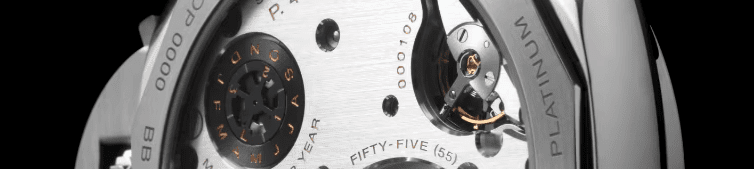
Panerai guards the exact recipe, but Platinumtech is a patented platinum alloy with increased hardness compared with traditional Pt950. Standard platinum alloys measure around 130 to 150 on the Vickers scale. Platinumtech is significantly tougher, achieved by alloying with undisclosed elements and an advanced heat-treatment. It comes out of Panerai’s own Laboratorio di Idee.
“80% harder than regular platinum” Panerai, on Platinumtech
For the wearer, that means:
- Improved scratch resistance compared with conventional platinum
- A case less prone to warping or denting
- Platinum’s heft and silvery-white colour, the traits collectors expect
Panerai’s position is clear: Platinumtech isn’t about changing platinum’s identity, it’s about refining it for modern wristwear. My own line on it is that Platinumtech isn’t about reinventing platinum, it’s about making platinum practical.
Platinumtech in Context: Panerai’s Material Laboratory
Platinumtech isn’t an isolated experiment. It belongs to a lineage of Panerai’s proprietary case materials:
- Carbotech: a layered carbon fibre composite, ultra-light and matte black, first seen in 2015.
- BMG-Tech: bulk metallic glass, an amorphous alloy with superior scratch and corrosion resistance.
- Bronzo: marine-grade bronze, prized for its patina and evolving character.
- Goldtech: a proprietary gold alloy enriched with copper and platinum, with a deeper red tone and greater resistance to fading over time.
- eSteel: Panerai’s sustainability-driven recycled steel alloy.
Goldtech is the closest relative. Both are precious-metal alloys that Panerai reformulated to be harder and more resistant than the standard version, one for gold and one for platinum. Next to the rest of the family, Platinumtech is the least radical in looks. It looks like platinum should. Its innovation is subtler, aimed at longevity and practicality rather than visual novelty, and that appeals to purists who want platinum’s gravitas without the wearability worries.
Which Panerai Watches Use Platinumtech?
This is the section that carries the article, so it runs long. Every Platinumtech reference so far is a limited edition.
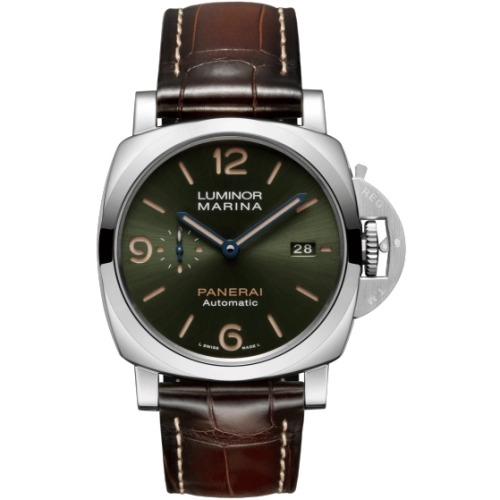
The Luminor Marina PAM01116 (2021)
The debut was the Luminor Marina Platinumtech PAM01116, released in 2021 as a 70-piece limited edition and sold only through Panerai boutiques. Key facts:
- A 44mm polished Platinumtech case, 13.4mm high, with the crown-protecting bridge and lever in the same alloy, and 50 metres of water resistance
- A dark olive-green sunburst dial in sandwich construction, with beige Super-LumiNova
- The P.9010 automatic with 72 hours of reserve
- A 70-year warranty, marked by an oversized emblem on the sapphire caseback, arriving in the wake of the Luminor’s 70th anniversary
- A launch price of $36,900
Launch coverage leaned on the same point: the alloy is harder than conventional platinum and harder to work and polish. The PAM01116 framed Platinumtech as a serious horological development, not a gimmick, by combining heritage design with metallurgical advancement.
The Luminor Perpetual Calendar PAM00715 (2021)
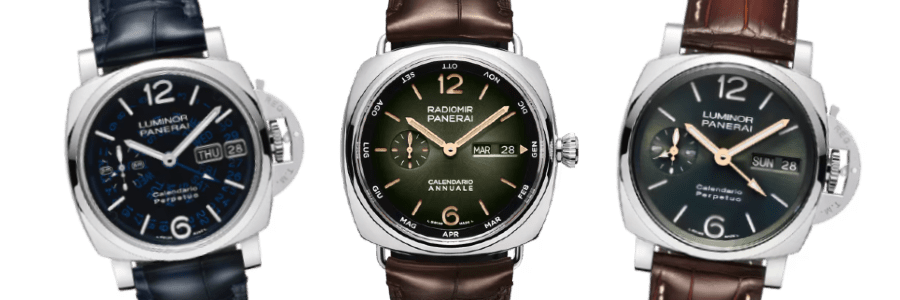
Later in 2021 came the PAM00715, a 44mm Platinumtech Luminor with a green sun-brushed dial and the P.4100 perpetual calendar, limited to 100 pieces at around €66,000. It carries the same alloy in a very different watch, and I cover the full story in my Panerai Perpetual Calendar guide.
The Radiomir Annual Calendar PAM01364 (2024)
In 2024 the alloy moved to the Radiomir: the PAM01364, a 45mm Platinumtech case with a green gradient dial and the P.9010/AC annual calendar. It’s limited to 200 pieces and sold only through Panerai boutiques, and my Radiomir Annual Calendar overview covers the family it belongs to.
The Radiomir Annual Calendar Experience PAM01432
The PAM01432 is the rarest: 24 pieces, a 45mm Platinumtech case, a burgundy sun-brushed dial and the same P.9010/AC. It is an Experience edition, which means the watch comes with an exclusive Panerai trip. Panerai launched the Experience programme in La Spezia in September 2019, with a first event alongside the Italian Navy’s special forces, and has run a number of them over the years, in three categories: Military, Adventure and Italianity. A good overview lists editions such as the Submersible Marina Militare Carbotech PAM00961, the Goldtech Calendario Perpetuo PAM01269 and the Mike Horn editions. The PAM01432’s experience was a three-day programme in Rome, and it launched at €90,000.
That price tells you what an Experience edition is. You are partly buying the case and partly buying the invitation, and the trip is not something a later owner of the watch gets to repeat.
Did Panerai Make Platinum Watches Before Platinumtech?
Yes, and that matters, because Platinumtech is sometimes described as if platinum arrived at Panerai in 2021.
It didn’t. The platinum Radiomir PAM00021, limited to 60 pieces with a period Rolex movement, came in the late 1990s. The platinum PAM00201 followed in 2005 and carried the first in-house movement, the P.2002. The Radiomir 3 Days Platino PAM00373, a 300-piece edition from 2011, used traditional Pt950, and the 2012 Radiomir 10 Days GMT Platino PAM00495 was limited to 100 pieces. All of them used conventional platinum.
So the PAM01116 wasn’t the first platinum Panerai. It was the first Panerai platinum designed to resist wear. That is a different claim, and it is the real innovation. The metal’s prestige was never in question. Its everyday behaviour was.
I’d argue this is the most honest way to read the alloy: not as a new material, but as a fix for an old one.
Durability and Wearability
From a collector’s lens, platinum watches often become safe queens, worn sparingly because of the fear of scratches. Platinumtech tackles that psychological barrier. The greater hardness makes it more practical for everyday wear, and it keeps the weight that defines platinum on the wrist.
What to expect from it:
- Polish that lasts: the case holds its shine longer between services
- Fewer micro-abrasions: the case keeps its definition
- Weight uncompromised: still substantially heavier than steel or titanium. The Platinumtech Radiomir Annual Calendar weighs about 195 g, against 169 g for the Goldtech PAM01363
This balance of luxury and usability makes it one of the few real-world answers among proprietary alloys, not just marketing gloss.
Serviceability and Long-Term Outlook
The same hardness that protects the case causes problems on the bench.
- Refinishing: polishing a harder platinum takes different tools and more time.
- Case repair: platinum is traditionally malleable. A hardened version can complicate resizing or reshaping.
- Spare parts: it’s a proprietary alloy, so servicing will stay tied to Panerai’s authorised network.
With an extremely limited reference made from an extremely hard material, that is the obvious conclusion. Platinumtech watches will hold their value best if they stay inside official service channels, and that’s worth factoring into long-term ownership.
Collectability and Market Perception
Platinumtech watches remain niche in Panerai’s catalogue, and all of them are limited. That scarcity reinforces exclusivity, but there is an open discussion on several watch forums about whether proprietary alloys really add long-term value compared with conventional platinum.
I own a Platinumtech watch myself, so take this as an owner’s opinion: the narrative matters. Platinumtech isn’t about reinventing platinum, it’s about making platinum practical. For enthusiasts, that justifies daily wear of what used to be a fragile trophy metal.
Who Is It For?
- The collector who wants platinum’s weight and colour without treating the watch as a safe queen
- Someone who wears precious metal daily and wants scratch resistance
- A Paneristi interested in Panerai’s material experiments, beyond steel and titanium
- Collectors who accept the limited editions and the Panerai service route
Not for: buyers who want an unlimited reference; anyone who plans to resize or reshape a case; owners who prefer independent watchmakers for service.
Conclusion
Panerai Platinumtech is a subtle but meaningful innovation. It doesn’t shout. It keeps platinum’s prestige while addressing its biggest limitation, softness, and it has done so across four limited watches from 2021 to 2024.
It is not the first platinum Panerai, and it is not a new metal. It is a harder one, and the cost of that hardness is in the workshop. Balanced against those service considerations and the limited availability, I see it as a thoughtful step in horological metallurgy, not a marketing flourish.
Does a hardened platinum alloy justify the premium for you, or would you stay with conventional platinum? Tell me in the comments.
Extended Summary
- Platinumtech is Panerai’s patented hardened platinum, first used on the 70-piece Luminor Marina PAM01116 in 2021.
- Standard Pt950 runs around 130 to 150 Vickers, and Panerai describes Platinumtech as 80% harder than regular platinum.
- Four limited references use it: PAM01116, PAM00715, PAM01364 and the 24-piece Experience edition PAM01432.
- Panerai made conventional platinum watches long before, such as the PAM00373, so the innovation is the hardness, not the metal.
- Hardness cuts both ways: scratch-resistant on the wrist, harder to polish, repair and service outside Panerai’s network.
At a Glance
| Reference | Watch | Year | Case | Dial | Movement | Edition |
|---|---|---|---|---|---|---|
| PAM01116 | Luminor Marina Platinumtech | 2021 | 44mm | Dark olive-green sunburst | P.9010 | 70 pieces, boutique only |
| PAM00715 | Luminor Perpetual Calendar Platinumtech | 2021 | 44mm | Green sun-brushed | P.4100 | 100 pieces |
| PAM01364 | Radiomir Annual Calendar Platinumtech | 2024 | 45mm | Green gradient | P.9010/AC | 200 pieces, boutique only |
| PAM01432 | Radiomir Annual Calendar Platinumtech Experience | 2024 | 45mm | Burgundy sun-brushed | P.9010/AC | 24 pieces, Experie |