Dino Zei inherited Officine Panerai in 1972 with almost nothing to run. No family member left to lead it. No civilian customers. No product line worth the name, watchmaking had been reduced to a rounding error inside a company that mostly built dive tools, radio equipment, and aerospace parts. He spent the next 25 years keeping it alive anyway, using the same institutional discipline he’d learned as a combat diver, before eventually having to sell the name he’d protected for a fraction of what it would soon be worth.
He’s the least mythologised figure in Panerai’s entire history, and arguably the most consequential. Without Zei, there’s no 1993 civilian launch, no brand for Vendôme to buy four years later, and no company left standing at all.
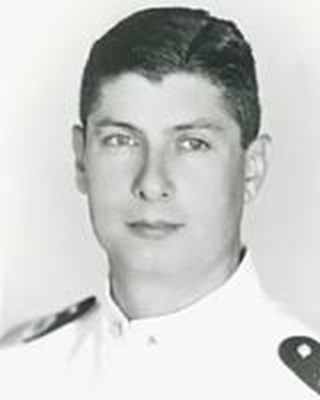
From CONSUBIN to CEO
Zei came from CONSUBIN, the Italian Navy’s elite combat-diver command, the direct institutional descendant of the wartime Decima Flottiglia MAS unit that had worn Panerai’s own instruments into combat three decades earlier. When Giuseppe Panerai died in 1972 without an heir, the company’s only real client, the Navy, effectively produced his replacement from within its own ranks. Zei was a retired naval officer and engineer, and he was the first person outside the Panerai family to run the business since Giovanni had opened the shop in 1860.
He renamed the company Officine Panerai S.r.l., reviving the name that had appeared on the earliest models, and took over both the business and the classified supply contracts that came with it.
Two Decades in the Wilderness
What Dino Zei actually did with the company for most of his tenure wasn’t watchmaking. He redirected it toward whatever military and industrial contracts were still available: diving instruments, aerospace components, radio equipment. Watch production, the thing collectors now associate entirely with the Panerai name, effectively stopped. For most of the 1970s and 1980s, Officine Panerai was a precision-instrument supplier that happened to still carry a watchmaker’s name, run by a man managing a company through the exact kind of quiet, resourceful discipline his Navy background had trained him for.
The Millemetri: An Achievement Nobody Wanted
In 1985, Dino Zei’s team presented the Navy with something genuinely impressive: a prototype called the Millemetri, a 47mm titanium watch built to withstand pressure well beyond 1,000 metres, using luminescent microtubes in place of applied lume compound. It was designed specifically to interest the Navy in a new generation of watch to replace the ageing Luminors still in service.
The Navy wasn’t interested. Whatever operational need had once justified a dedicated dive instrument had shifted, and a genuinely capable piece of engineering sat unused. It’s a small, honest data point worth including precisely because it isn’t a triumph: Zei’s team could still build something technically remarkable, and the market that had defined the company’s entire purpose for decades simply wasn’t asking for it anymore.
Back to Watches, 1993
By the early 1990s, Dino recognised something the Navy contracts alone couldn’t offer: mechanical watches were entering a genuine revival after the Quartz Crisis, and Panerai’s own back catalogue, oversized military cases, radium and tritium lume history, a design language nobody else had, was sitting there unused. He pushed the company back toward watchmaking, drawing directly on references dating to the 1930s and ’40s.
On 10 September 1993, Officine Panerai presented its first civilian collection aboard the Italian Navy cruiser Durand De La Penne, in the military harbour of La Spezia. Duke Amedeo D’Aosta, son of Aimone di Savoia and at the time the supreme head of the Italian diving department, attended the ceremony. Three references launched: the Luminor, the Luminor Marina, and the Mare Nostrum chronograph, each one drawing directly on military designs the Navy had kept classified for decades. They sold out almost immediately.
The Stallone Gamble
By 1995, with the company still deeply in debt, a business associate proposed placing a Panerai on Sylvester Stallone’s wrist for his film Daylight, in exchange for building him a small run of watches carrying his nickname on the dial. Dino Zei wasn’t enthusiastic. In a filmed interview conducted years later for the book Panerai – Una Storia Italiana, he recalled his own hesitation plainly:
“Zei disliked the idea of making a special model for an actor…” Dino Zei, interviewed for Panerai – Una Storia Italiana, 2012, as documented by Perezcope
He agreed to explore it anyway, because the alternative was doing nothing while the company’s finances kept deteriorating. The arrangement generated real attention for the brand. It also cost money the company didn’t have, one more financial strain on an operation that had been running on discipline rather than capital for over two decades.
Selling the Name, March 1997
By early 1997, the accumulated debt had caught up with the business. In March of that year, Zei sold the Officine Panerai name and remaining stock to the Vendôme Luxury Group, later Richemont, for a sum reported at around $1 million. It was, by any measure, a modest price for a name that would be worth vastly more within a few years, once Vendôme’s resources and a new CEO turned a niche military curiosity into a global luxury brand.
Zei’s 25-year tenure ended there. He’d taken a company with no owner and no market and kept it operating long enough for someone else to eventually build a globally recognised name on top of it. What Giuseppe Panerai had guarded through total secrecy, Dino kept alive through improvisation, and handed off at the exact moment it finally had something worth buying.
The Throughline
There’s a specific kind of discipline that runs from the Decima Flottiglia MAS frogmen who wore Panerai’s original instruments, through CONSUBIN, and into Dino’s own 25 years running the company: do the job with what you have, don’t wait for ideal conditions, keep functioning when the mission changes underneath you. Zei didn’t inherit a brand. He inherited an obligation, to a Navy client, to a name with history attached to it, and to a company that had no other reason to exist. He met that obligation for a quarter century, using judgment that had nothing to do with luxury marketing and everything to do with keeping an operation alive on limited resources.
The 1993 relaunch gets remembered as Panerai’s rebirth. It’s worth remembering it was also the last major decision of a man whose real achievement was simply making sure there was still a company left to relaunch.
Does Zei’s contribution get overshadowed by what came after him, the Vendôme years, Bonati’s transformation, because his own chapter was survival rather than growth? Or is keeping something alive, with nothing to work with, actually the harder job?
Dino Zei: Key Dates
| Background | Retired Italian Navy officer, CONSUBIN combat-diver command |
| Took over Officine Panerai | 1972, following Giuseppe Panerai’s death without an heir |
| First non-family leader | In the company’s history since 1860 |
| Focus during 1970s–80s | Aerospace components, radio equipment, dive tools; watchmaking nearly ceased |
| Millemetri titanium prototype presented to the Navy | 1985 |
| First civilian collection launched | 10 September 1993, aboard the Italian Navy cruiser Durand De La Penne, La Spezia |
| Stallone product-placement arrangement | 1995–96 |
| Sold Officine Panerai to Vendôme Luxury Group | March 1997, for approximately $1 million |